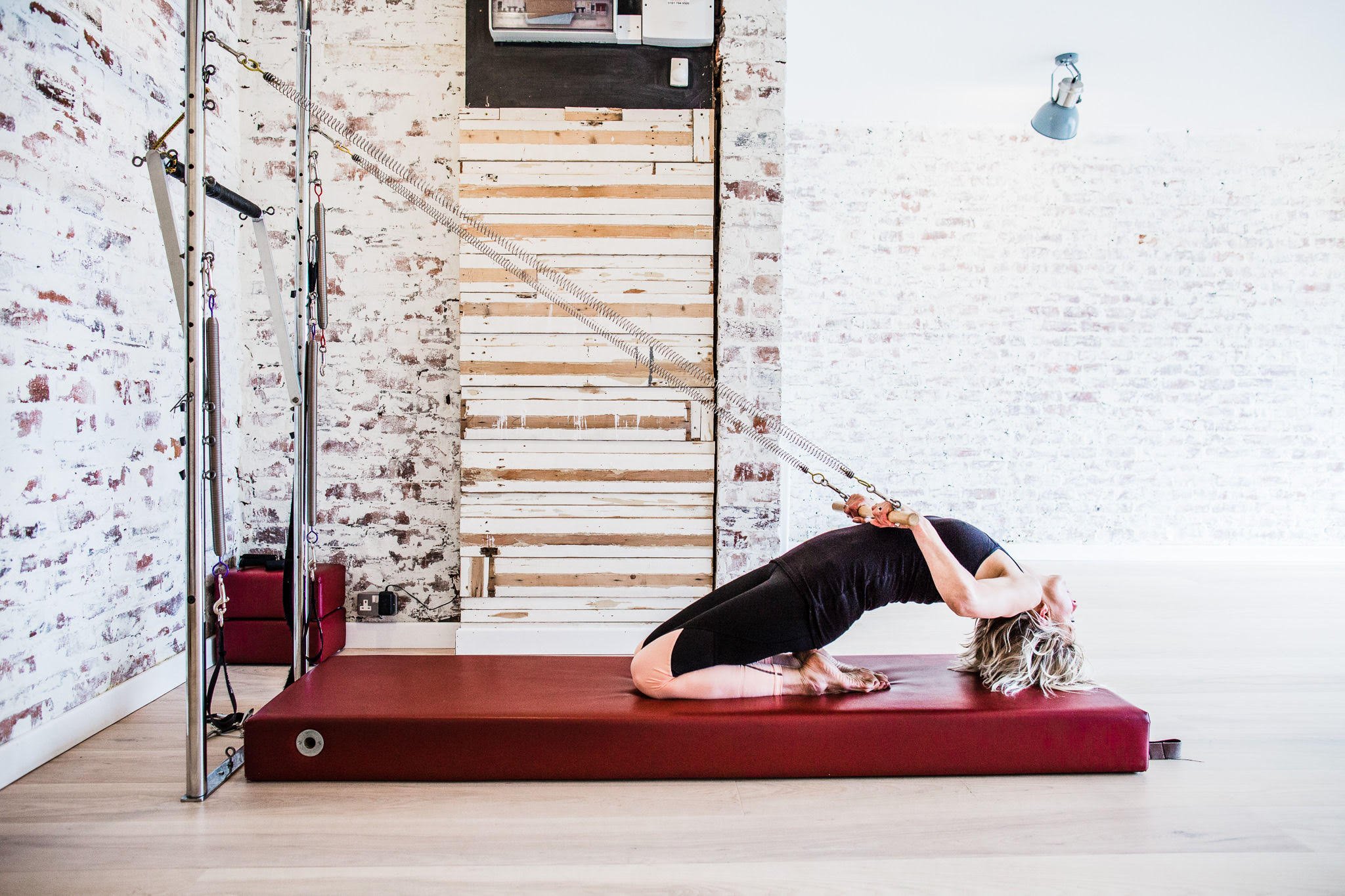
Tower Classes: Your Medicine for Strength
Tower classes are one of our signature offerings at Loving Pilates UK — and for good reason.
The Tower, more accurately known as the Wall Unit (sometimes called Wall Pilates), is a deeply intelligent and versatile piece of Pilates equipment. Traditionally, it is considered to be derived from the Cadillac, forming one end of the full apparatus. However, like much of the Pilates method, its inspiration may also stem from movement equipment developed even before Joseph Pilates refined his work.
What we do know is this:
Tower exercises are a vital part of the classical Pilates system.
A Classical Tool with Endless Possibilities
Unlike the Mat or the Reformer, the Tower does not follow a fixed order of exercises. Instead, the work is organised into levels, a system created by Romana Kryzanowska to make the method more accessible and teachable — especially for new teachers learning to honour the integrity of the work. The Tower was not necessarily meant to have a full hors work on it, but be a support for your body building an exercise, somewhere in the system. However as a studio we will now have classes on the this versatile equipment.
Although there is no set sequence, a skilled teacher will often create a sense of flow by loosely referencing the Mat order or weaving in familiar patterns. This helps the body recognise movement, build understanding, and connect more deeply to the work.
Targeted, Intentional, and Powerful
Tower classes allow the teacher to be highly intentional. A session may focus on a specific area of the body or a particular movement pattern, using the springs to both support and challenge where the body needs it most.
This is where the Tower truly becomes your medicine.
The Wall Unit is incredibly versatile — so versatile, in fact, that it’s easy to do too much. That’s why intention is everything. Before teaching, it’s essential to know:
the level you are working at
what that level is designed to strengthen
and who is in front of you
Even at the beginner level, there is an abundance to teach. When you truly understand the equipment, the levels, and your clients, the work becomes rich, intelligent, and deeply effective.
Teaching with Parameters and Purpose
To stay as true as possible to the framework of the method, I personally create clear parameters for each class. I choose to work with only three out of four key elements in any one session. This keeps me present, focused, and responsive.
I also like to create a theme, especially at beginner level. Often, this will be the box — working from shoulders to pelvis and allowing movement to originate and flow from there. This gives clarity, confidence, and continuity to the class.
Strength That Builds Quietly — and Deeply
Interestingly, when I track my heart rate during Tower sessions, it doesn’t rise dramatically. Yet my strength increases noticeably.
The springs on the Tower are often stronger and more demanding than those on the Reformer. They build strength precisely where it’s needed, supporting the body while preparing it for greater challenges — including more advanced Reformer work.
This is why I often find my own medicine on the Tower.
What to Expect from a Quality Tower Class
Whether you are attending or teaching a Tower class, two things are non-negotiable:
knowledge and safety.
A responsible studio will guide clients into the right level, and teachers should always begin teaching at the beginner level before progressing.
Class size matters too. From experience, a maximum of five clients per Tower class allows the teacher to maintain safety, clarity, and individual attention. We have experimented with six, but it pushes beyond the teacher’s comfort zone — and safety should never be compromised.
At Loving Pilates Studio, both teachers and clients deserve to feel confident, supported, and safe.